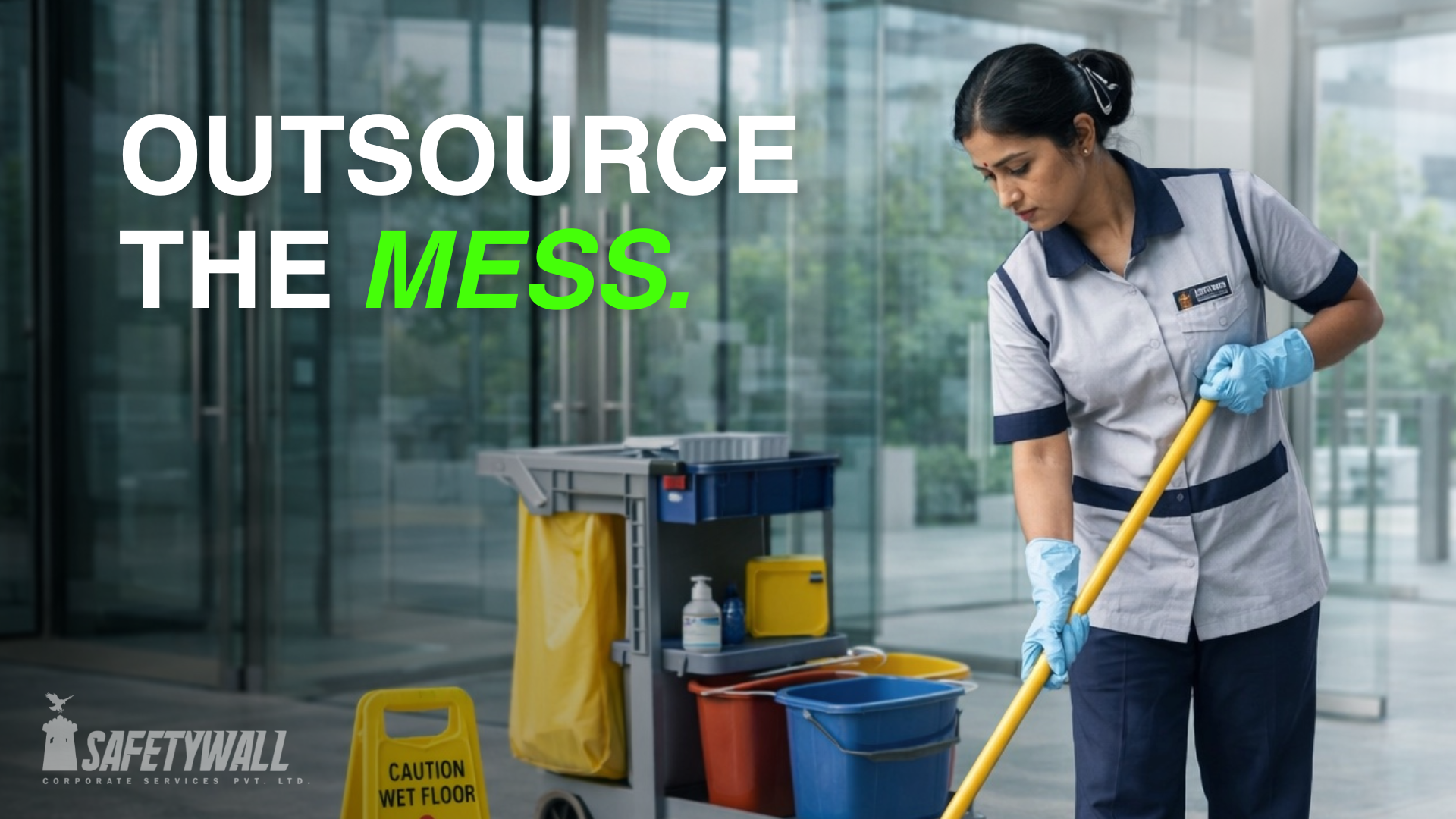
Every facility manager eventually asks the same question: should housekeeping stay in-house, or should it be outsourced to a specialist vendor? The answer usually gets decided on price alone but that's only half the picture. The real comparison is about what you're actually paying for, and what you're actually getting.
Here's a straightforward breakdown of both models, so you can make the call with the full picture in front of you.
The Cost Comparison
In-house housekeeping looks cheaper on paper until you account for everything that sits underneath the headline salary figure: PF and ESI contributions, uniforms, cleaning equipment and consumables, supervisor overhead, recruitment costs when someone leaves, and the ongoing time your facility team spends managing attendance, performance, and disputes. None of that shows up in a simple "cost per staff member" calculation, but all of it hits your budget.
Outsourced housekeeping is billed as a single, predictable line item typically per headcount or per scope of work with equipment, consumables, supervision, and compliance already built into the vendor's cost structure. You lose some line-item visibility, but you gain a number that doesn't move every time someone quits or a machine breaks down.
The honest comparison isn't "in-house is cheaper" or "outsourcing is cheaper" it's that outsourcing converts a dozen unpredictable costs into one predictable one.
The Quality Comparison
This is where the real difference usually shows up.
In-house teams depend entirely on your own hiring, training, and supervision capacity. If your facility team is strong at recruitment and quality control, in-house housekeeping can work well. But most facility teams weren't built to run a housekeeping operation they were built to manage a building. Training tends to be inconsistent, backup coverage for absences is thin, and quality often depends heavily on whoever happens to be supervising that week.
Outsourced teams, when the vendor is a genuine specialist, bring standardized training, documented SLAs, built-in backup staffing for absences, and a supervisor structure whose entire job is housekeeping quality not split across five other facility responsibilities. The tradeoff is that quality is only as good as the vendor you choose; a weak vendor delivers weak results with the same "outsourced" label.
Where In-House Still Makes Sense
In-house housekeeping can work well for smaller facilities with low staff turnover, a strong internal HR function, and a facility manager who has the bandwidth to actively supervise quality. If your headcount need is small and stable, the overhead of vendor management may not be worth it.
Where Outsourcing Wins
Outsourcing tends to make the most sense as facilities scale multi-building campuses, IT parks, hospitals, and logistics sites where staffing needs fluctuate, coverage gaps are costly, and facility managers don't have the time to run recruitment and training as a side function. It also matters when compliance is non-negotiable: a specialist vendor is built around statutory compliance (PF, ESI, minimum wage, contract labour regulations) as a core part of the business, not an afterthought.
The Question That Actually Decides It
The real question isn't "which is cheaper" it's "what am I equipped to manage well?" If your facility team can hire, train, supervise, and cover for housekeeping staff as well as a dedicated vendor can, in-house may work. If housekeeping quality has been inconsistent, coverage gaps keep showing up, or your team is spending more time managing staff than managing the facility, that's usually the signal that a specialist vendor will do the job better and with less of your time spent on it.