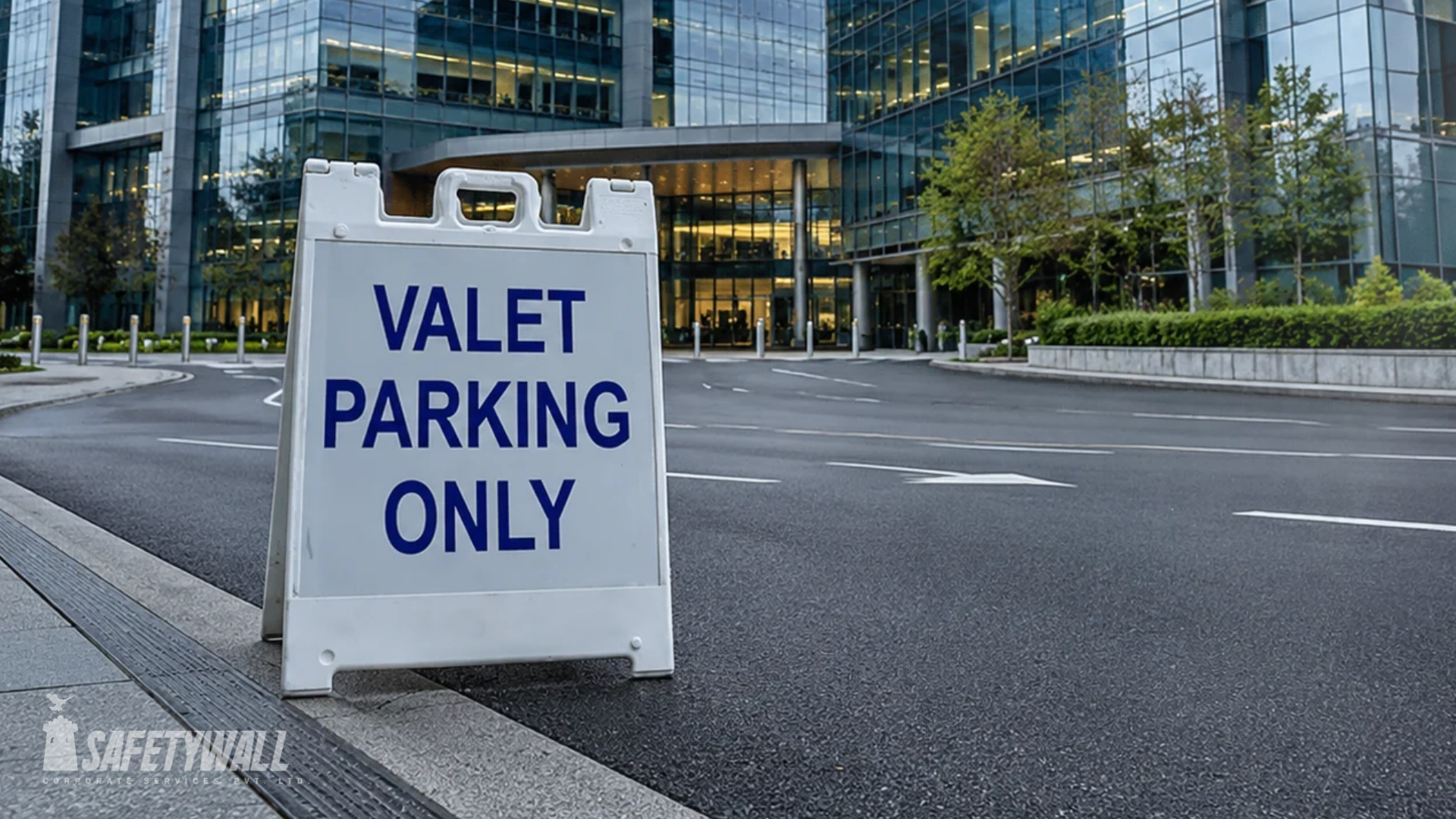
Walk into any large IT park during peak entry hours 9 to 10 AM, or the evening shift change and you'll see the problem before anyone has to explain it. Cars backed up at the gate. Employees circling for a spot. Security staff waving hands, trying to direct traffic with no system behind the effort.
For a campus handling 500, 1000, or more vehicles a day, this isn't a minor inconvenience. It's a daily operational failure that just happens to be normalized.
Why Scale Changes the Problem
Managing 50 vehicles is a parking issue. Managing 500+ is a logistics operation — and it needs to be treated like one.
At scale, informal parking management breaks down in predictable ways:
- Multiple entry points and shift overlaps mean traffic doesn't arrive in one wave, it arrives in several, often overlapping with visitor and vendor traffic.
- No real-time visibility into which sections are full, which are empty, and where bottlenecks are forming.
- Untrained staff directing traffic ad hoc, with no standardized process, means every shift handles the same problem differently.
- Zero accountability for vehicle handling, when something goes wrong with one of 500+ cars, there's no way to trace what happened or when.
The chaos isn't caused by volume alone. It's caused by volume meeting an unstructured process.
What a Proper Valet Operation Looks Like at This Scale
Zone based management. Large IT parks benefit from dividing parking into zones by building, by employee vs. visitor, by two-wheeler vs. four wheeler with dedicated valet staff assigned to each. This alone eliminates the single biggest source of congestion: everyone converging on the same entry point.
Shift aligned staffing. Valet teams scheduled around actual traffic patterns heavier staffing at shift change hours, lighter during the mid day lull rather than a flat headcount that's either understaffed at peak or wasted during quiet hours.
Digital or token based tracking. A simple, consistent system for logging vehicle entry, attendant assignment, and exit means any vehicle can be located or accounted for within minutes, not through a frantic radio call.
Trained personnel, not just parkers. Valet staff who double as an extension of the security layer checking for authorized access, flagging unusual activity, maintaining composure under pressure turn a parking function into part of the campus's broader security posture.
Clear escalation protocols. When something does go wrong a damaged vehicle, a lost token, a dispute a trained team follows a defined process instead of improvising in front of a frustrated employee.
The Compounding Effect at Scale
At a small property, disorganized parking creates minor friction. At a 500+ vehicle IT park, it compounds:
- Ten minutes lost per employee, multiplied across hundreds of people, is real productivity lost every single day.
- One untracked vehicle becomes a security gap that's disproportionately harder to close once volume is high.
- A congested entrance during a shift change doesn't just annoy people — it becomes a bottleneck that affects the entire campus's daily rhythm, tenants included.
This is exactly why large campuses can't treat parking as an informal afterthought the way a smaller property might get away with. The margin for improvisation shrinks as volume grows.
The Shift IT Parks Need to Make
The campuses that solve this well aren't necessarily spending dramatically more they're structuring the function properly: zoned, staffed to actual demand, tracked, and integrated with the broader security operation rather than treated as a separate, informal task handed to whoever's available.
For a property managing hundreds of vehicles a day, professional valet management isn't a premium add on. It's the difference between a campus that runs smoothly and one where every morning starts with the same avoidable bottleneck at the gate.
SafetyWall provides trained security and facility management staff — including zoned valet and parking management — for large IT parks and corporate campuses.